
What Does “Frontline Operations” Actually Mean in Social Housing?
If you work in or around social housing, you’ve probably heard the term “frontline operations” used a lot. It’s often mentioned in meetings, reports, and strategies—but what does it actually mean in practice?
Let’s break it down in simple terms.
What Are Frontline Operations?
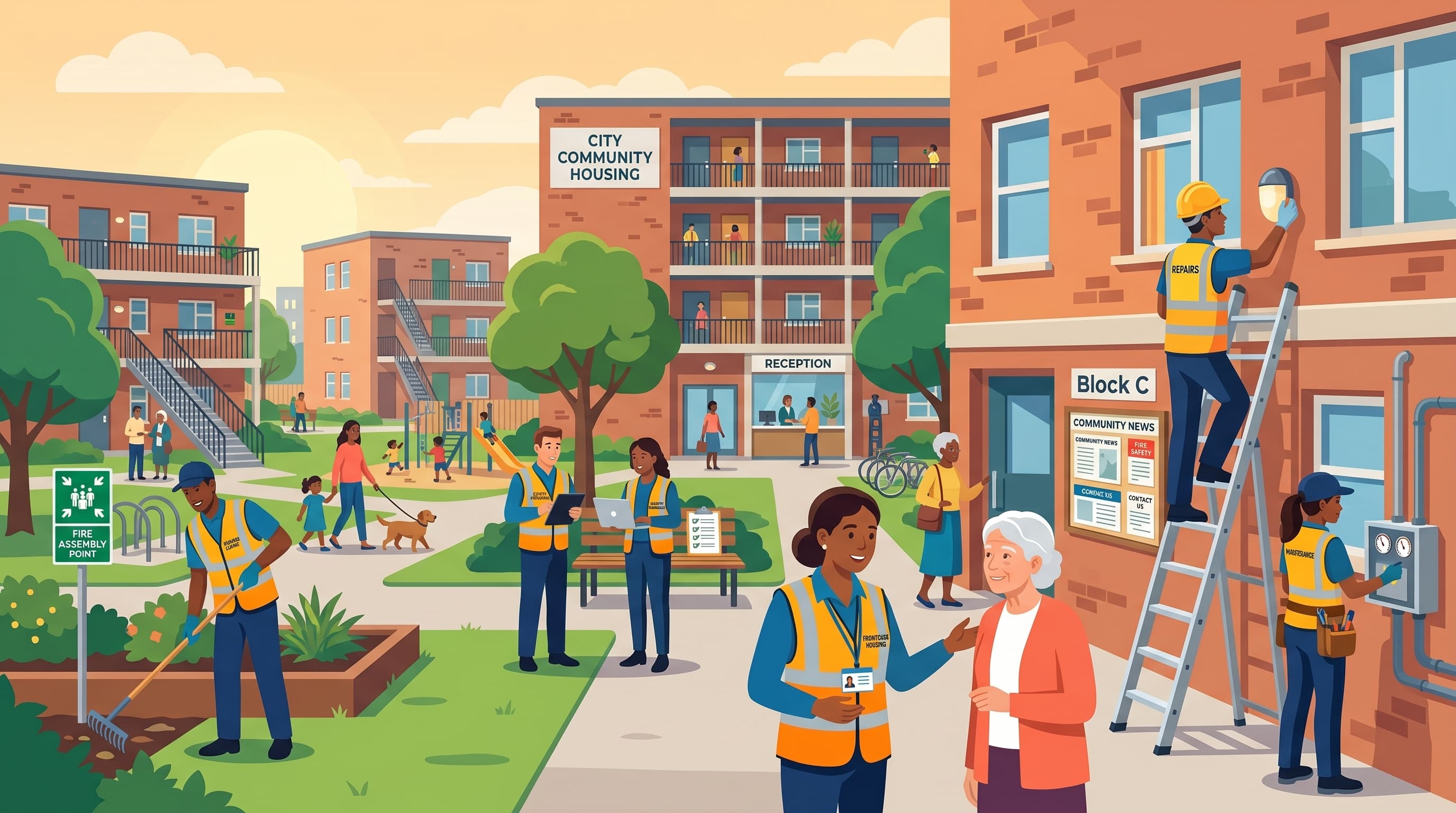
In social housing, frontline operations refer to the day-to-day services that directly impact residents, properties, and communities.
These are the roles and activities that sit closest to tenants—the people delivering services on the ground rather than planning them behind the scenes.
In short:
Frontline = where services meet residents.
Who Is Included in Frontline Operations?
Frontline operations typically include teams such as:
- Repairs and Maintenance Teams Carrying out day-to-day repairs, emergency call-outs, and planned works.
- Housing Officers Managing tenancies, handling anti-social behaviour (ASB), and supporting residents.
- Estate and Neighbourhood Teams Keeping communal areas safe, clean, and well-managed.
- Customer Service Teams First point of contact for residents reporting issues or requesting support.
- Compliance and Safety Teams Ensuring homes meet legal standards (gas, fire, electrical safety, etc.).
These roles are the backbone of service delivery—they’re visible, responsive, and essential.
Why Frontline Operations Matter
Frontline services are where organisational performance is truly tested.
They directly influence:
- Resident satisfaction
- Property condition and safety
- Regulatory compliance
- Reputation of the housing provider
A well-run frontline operation means issues are resolved quickly, residents feel heard, and risks are managed effectively.
The Risks of Getting It Wrong
When frontline operations aren’t working properly, problems escalate quickly. Common risks include:
- Delayed or missed repairs
- Poor communication with residents
- Non-compliance with safety regulations
- Increased complaints and reputational damage
- Higher long-term costs due to reactive fixes
In the current regulatory environment, these aren’t just operational issues—they can become serious governance and compliance risks.
Frontline vs Back Office – What’s the Difference?
It’s helpful to distinguish between frontline and back-office functions:
| Frontline Operations | Back Office Functions |
|---|---|
| Direct resident interaction | Strategic planning |
| Service delivery | Policy development |
| On-the-ground problem solving | Finance, HR, IT |
| Immediate response | Long-term oversight |
Both are essential—but frontline teams are where the real-world impact is felt first.
The Growing Importance of Frontline Data
Modern social housing providers are increasingly focusing on data from frontline operations to drive decisions.
This includes:
- Repair response times
- Complaint trends
- Safety checks and compliance data
- Resident feedback
Better data = better decisions = better outcomes for residents.
Final Thoughts
“Frontline operations” might sound like jargon, but it’s actually simple:
It’s the people, processes, and services that directly support residents every day.
Getting this right isn’t optional—it’s fundamental to delivering safe, compliant, and high-quality housing.
For organisations looking to improve performance, reduce risk, and build trust, the answer often starts at the frontline.
Wavio's Neighborhoods app is built specifically for frontline housing teams — replacing spreadsheets and fragmented tools with inspections, action tracking, lone worker monitoring, and real-time dashboards. See how it works →