
It’s All About the Risk
Why Risk Registers Matter More Than Ever in UK Social Housing
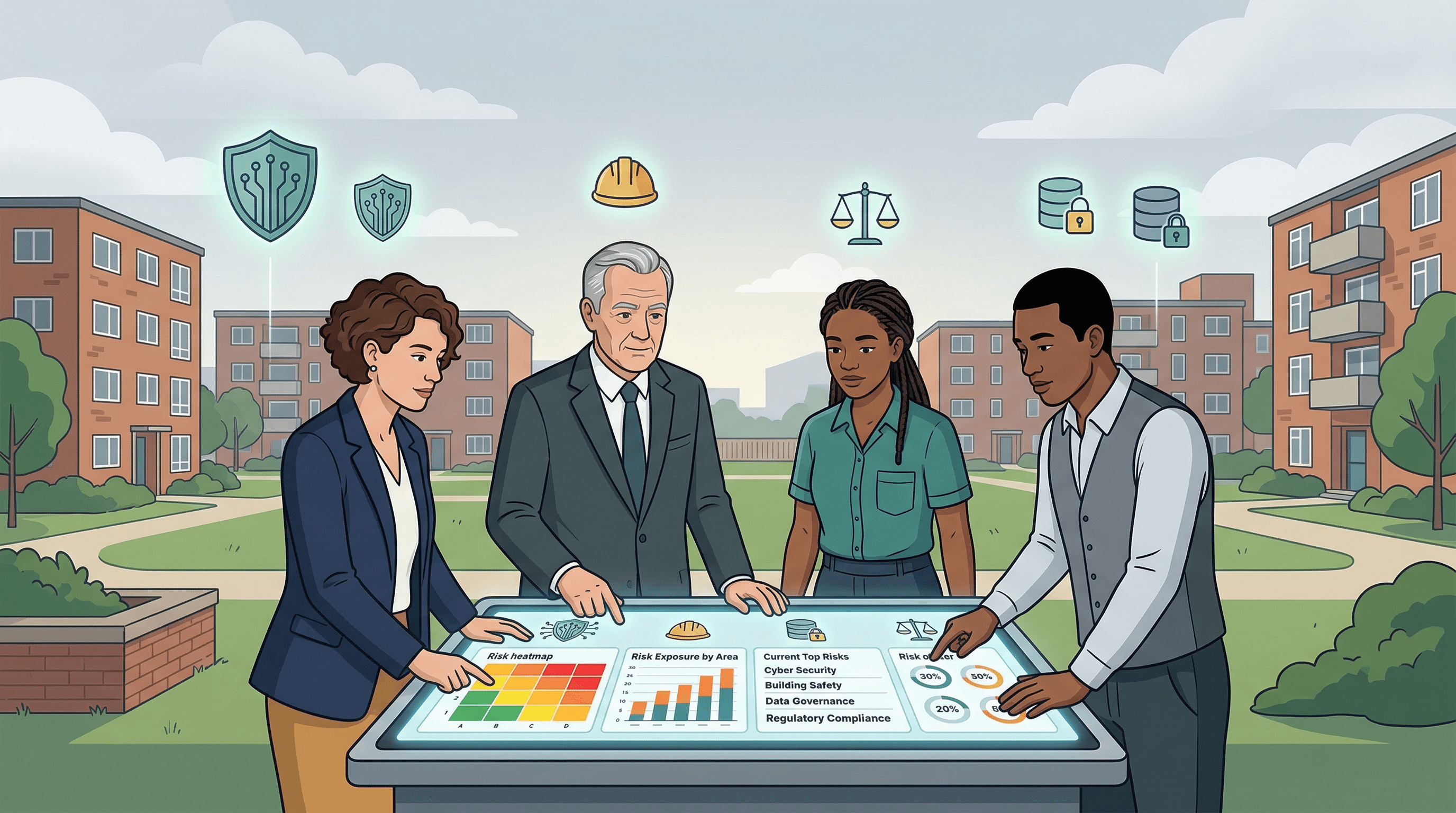
In social housing, risk is unavoidable. Whether it’s building safety, regulatory compliance, cyber security, or financial pressures, housing associations operate in an environment where the stakes are high and the consequences of getting it wrong can be significant.
That’s why risk registers are not simply governance paperwork. Done properly, they are one of the most powerful tools a housing organisation has to anticipate problems, prioritise action, and protect residents, staff, and the organisation itself.
Put simply – it’s all about the risk.
The Sector is Operating in a Complex Risk Environment
Every year the housing sector takes stock of the risks facing organisations through the annual survey analysed by Inside Housing. The 2026 survey examined the financial reports of 100 housing associations to identify the strategic risks boards are monitoring most closely.
The findings show just how complex the operating environment has become.
The most frequently identified risks include:
- Cyber security and IT resilience
- Health and safety
- Customer service and tenant expectations
- Data governance and data quality
- Asset management and stock condition
- Financial pressures
- Development and delivery risks
- Workforce recruitment and retention
- Legal and regulatory compliance
- Sustainability and net zero commitments
For many organisations, cyber security has now been the most commonly reported strategic risk for three consecutive years, with the vast majority of housing associations highlighting it on their risk registers.
This demonstrates a simple truth: risk is evolving quickly, and organisations must evolve with it.
A Risk Register Is Not Just a List
Too often, risk registers are seen as static documents — something produced for an audit committee or board meeting and then left untouched until the next reporting cycle.
In reality, a good risk register is a live management tool.
It should answer three fundamental questions:
- What could go wrong?
- How likely is it to happen and what would the impact be?
- What are we doing about it?
In housing organisations, this means linking risks directly to operational activity. For example:
- A health and safety risk must connect to compliance programmes, inspections, and reporting.
- A cyber risk must connect to IT controls, penetration testing, and staff training.
- A regulatory compliance risk must connect to governance structures and policy reviews.
If a risk is recorded but not actively managed, the register has failed its purpose.
Governance Starts with Understanding Risk
Strong governance in housing organisations is built on understanding risk.
Boards and executive teams rely on risk registers to:
- prioritise resources
- challenge management assumptions
- understand emerging threats
- ensure compliance with regulatory expectations
Increasing regulatory scrutiny across the housing sector means that organisations must demonstrate not only that risks are identified, but that they are actively monitored and controlled.
The regulatory environment continues to evolve with new consumer standards and safety legislation, increasing the importance of strong risk management frameworks.
Risk registers therefore sit at the heart of organisational assurance.
A Risk Register Must Be Actively Maintained
A common mistake in organisations is treating the risk register as a quarterly update.
In practice, it should be reviewed regularly and updated whenever circumstances change.
Good practice includes:
- Regular review cycles (monthly or quarterly)
- Clear ownership of each risk
- Defined mitigation actions
- Tracking movement in risk scores
- Escalation routes for emerging risks
Risk is dynamic. A register that isn’t updated becomes outdated quickly and fails to reflect the real operating environment.
Data, Technology and Emerging Risks
One of the clear trends emerging across the sector is the growing importance of data governance and digital resilience.
Housing organisations now rely heavily on digital systems for:
- tenant services
- asset management
- financial reporting
- compliance tracking
With that comes a growing exposure to cyber threats and data risks. This explains why cyber security remains the most commonly identified strategic risk across housing associations.
Emerging technologies such as artificial intelligence are also beginning to appear in risk registers as organisations consider both the opportunities and risks they present.
Forward-looking organisations are already considering these emerging issues as part of their risk management strategies.
Risk Management Is Ultimately About People
Behind every risk register are people — residents, employees, contractors, and communities.
When risk management works well, it:
- protects residents from harm
- supports safe and compliant homes
- ensures financial sustainability
- enables organisations to deliver services effectively
When it fails, the consequences can be serious.
This is why risk registers should never be seen as a compliance exercise. They are a critical part of responsible governance and organisational leadership.
The Bottom Line
The housing sector is facing increasing complexity, regulatory scrutiny, and operational challenges. Risk registers help organisations navigate that complexity.
But they only work if they are used properly.
A good risk register is:
- current
- actively monitored
- owned by leadership
- embedded in decision-making
Because in social housing — as in many sectors — success often comes down to how well organisations understand and manage risk.
And in the end, it really is all about the risk.